
Artificial intelligence is no longer a futuristic concept, as it is presently reshaping our industries from banking to retail, healthcare, and logistics. The AI-driven marketing campaigns and real-time optimization consist of examples of how businesses are becoming smarter and faster and require professionals who can work in these circumstances with precision and profound understanding.
This change is about managers who can lead in this new reality, not just machines and the digital world. AI is no longer a tool in one’s arsenal but a core business driver.
During his recent interview with the platform “Poets & Quants,” Dr. S. Arunachalam spoke on the topic of building a B-school with AI as its spinal cord. He talks about why AI is the future of management education and how PGDM programs must adapt by embedding artificial intelligence across all the subjects.
Business management used to be about intuition, experience, and analysis. Artificial Intelligence has ushered in data-backed decisions. It amplifies the shift by automating the ‘known’ to make free time to focus on the ‘next.’
The rapid growth of automation, predictive analysis, and personalization in customer journeys and conversions is significantly impacting the business world. This makes it very important in this regard in various sectors, like
The managers of the future will not only be managing human resources, as it will be a combination of artificial intelligence and human intelligence.
The traditional legacy B-schools still rely on the old methods of ‘case studies’ teaching, which still holds value in standard management practices but isn’t enough for the AI-ready world. For instance,
The disconnect of the traditional B-schools risks leaving graduates with a PGDM that is not future-proof and doesn’t integrate AI into its curriculum and coursework.
At BSM, artificial intelligence is not a side subject or an elective; it forms the central part of the curriculum and runs through like a ‘spinal cord,’ connecting disciplines and holding the structures upright. The features that make BSM and Artificial intelligence its spinal cord are,
Also Read: Logistics and Supply Chain Management in PGDM
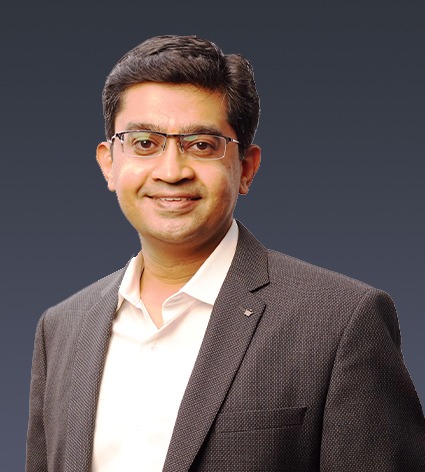
Under the leadership of Dr. S. Arunachalam, dean and director of BSM, the B-school has embraced artificial intelligence to shape strategy and culture. He has a PhD from Iowa State in business and Technology, majoring in marketing with a minor in statistics, and has served as faculty at Texas Tech University.
He served as faculty at the Indian School of Business (ISB) in Hyderabad for eight years prior. He calls the process of traditional B-schools “incumbent inertia,” the difficulty of established business schools in changing course.
He suggests a “three A model” of AI adoption: adopt, apply, and absorb regarding the use of artificial intelligence.
For example, all the students at BSM must take AI for Non-Technical Managers as a core requirement, not an elective. Another course BSM will introduce is From Zero to Hero: Generative AI and Its business applications.
He has made a deliberate attempt to build a program around ESPs—Essential Skills & Perspectives—with short modules that emphasize holistic student development.
When evaluating PGDM programs, the choice of students should not be to look for programs that present electives that are not woven into every subject and focus on data fluency. Students should apply to courses like PGDM at BSM, where the curriculum is future-ready and seeks applied learning and hybrid careers. Choosing a PGDM that embraces AI today will define your career tomorrow.



.svg)

.svg)