
Picture all the products that are delivered to your home; whether it’s the latest smartphone or your favourite branded shoe, they are reaching you with the help of a system, and its management is known as logistics and supply chain management (LSCM). Supplying and handling the raw materials to the finished products and all the activities is performed with the help of logistics and supply chain management.
Earlier, what used to be simple paperwork, and cross-checking has now transitioned to a digitally led information exchange, and the use of similar technologies in operations of logistics and supply chain management has increased. The digital transformation of various operations related to logistics and supply chain management has progressed in leaps and bounds. With this, the supply chain management meaning has also transitioned in the digital age.
The relevance of logistics in the digital age, with the ushering of new technologies like the internet of things (IOT), blockchain, and big data analytics, has dynamically changed the traditional supply chain management. Across the world, new avenues and ways to manage supply chains have emerged that are developing and evolving as time progresses.
For example, the classic case of LSCM and digital transformation is corporate giant Amazon and how it has made home delivery so quick in time and ensured the quality standards are up to standard, which was unthinkable before its inception. Similar is the case with companies adopting other emerging technologies that are like artificial intelligence, blockchain supply chain transfers, etc.
With the moving times, we need professionals that can adapt to the various technologies in the dynamic digital age and provide leadership to businesses. They need to be thorough with the new trends and what’s recent and developing and keep upskilling with the demands of the market.
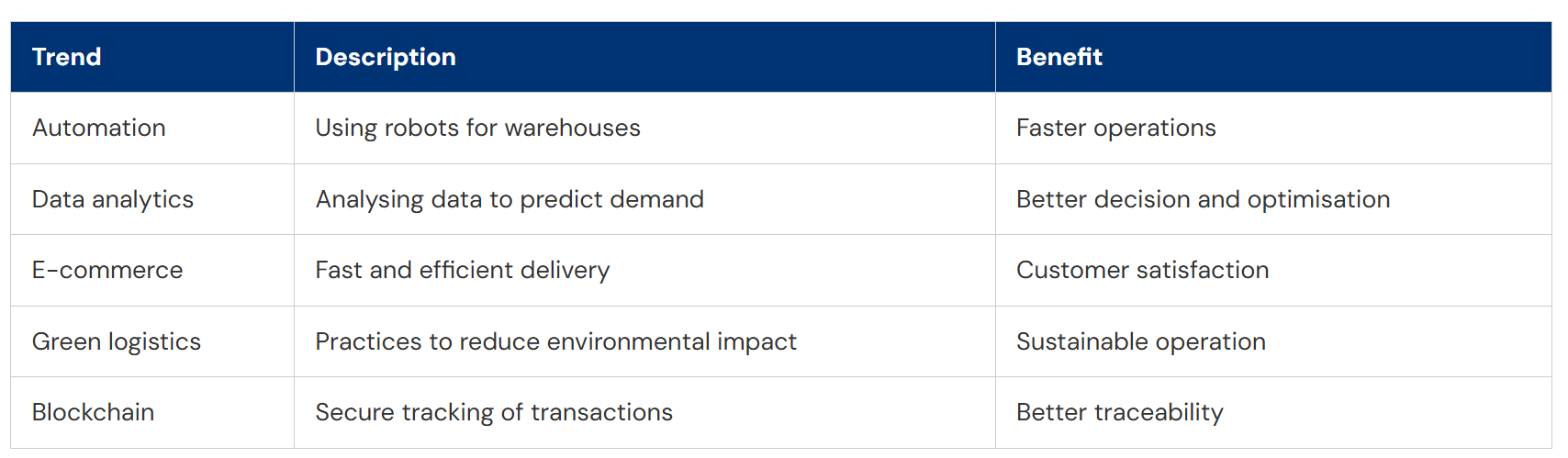
The key trends of logistics and their benefits in the digital age are as follows:
With the advancements in technology, it has also led to altering of the tastes and choices that the customers make. The speed at which goods used to get delivered has shrunk a lot over the past two decades. The shortage of delivery in the e-commerce sector and good quality assurance have also affected how logistics support and supply management operate. New customer expectations are driving the innovations and experiments in the sector.
Here is a comparison of how e-commerce has shifted the consumer expectations.

Issues like last-mile delivery, live tracking, and customer-centric solutions, even with the help of technology, need modern-day leadership, guidance, and supervision.
The demand for professionals who can solve logistics and manage efficient supply chains is ever present. Whether it’s the technological giants or hardware companies, they require professionals with transferable skills that can solve the business problems in an efficient manner.
The phenomenon of globalisation, technological improvements, and digitisation all have a role to play in furthering the skills of the students so that they can meet the challenges head-on for the future. The skills of PGDM translate and prepare for a career in logistics management and supply chain management.
The various skills that are developed during a Post Graduate Diploma in Management (PGDM) are as follows:
These are some of the ways a PGDM helps students to prepare for a truly globalised world and a career in logistics and supply chain management. The skills are improved with practical learning experiences, and a bridge is established with the industry through internships and immersion to address the issues with LSCM.
Also Read: From Theory to Practice: Understanding Operations Management
The transformation of LSCM has opened a lot of opportunities for PGDM students, and roles like logistics manager and procurement specialist are always in demand. Choosing the right logistics and supply chain management course can become a difficult choice for students.
How can the students move forward? BSM solves this by providing one of the best opportunities with their PGDM programme, The industry-ready modules emphasise on relevant subject matter and current themes such as the dynamics of digitisation in the globalised world and provide perspective to the theoretical aspect.
It also facilitates hands-on training and quality control. The programme fosters global perspective by providing case studies and mentorship with industry leaders. As businesses continue to embrace technological transformation, making PGDM students invaluable in shaping the future of logistics and supply chain management.
Learn more about Badruka’s PGDM Programme



.svg)

.svg)